
Apple Watch Buying Guide: Which Model Is Right for You?
iShure sells three families of Apple Watch: Apple Watch SE 3, the Series models (Series 11 and the newer Series 12) and the Ultra models (Ultra 3 and the newer Ultra 4). All of them track workouts, sleep and notifications, so the right choice depends on which extra features, battery life and durability you will actually use.
This guide explains what each family adds, which features work in South Africa and when paying more is worthwhile.
Quick recommendation
- Apple Watch SE 3
- for first-time owners and everyday activity, notifications, sleep tracking and safety features at the lowest price.
- Series 12 or Series 11
- if you want the larger, brighter display, the ECG and Blood Oxygen apps, faster charging and a longer day of battery.
- Ultra 4 or Ultra 3
- for long hikes, trail runs, ocean swimming or recreational diving, or anyone who wants multi-day battery life and a tougher case.
The models iShure sells
Series 12 and Ultra 4 are the newest generations, released by Apple in September 2026. Series 11 and Ultra 3 are the previous generation and are still listed at iShure. Compare current prices on the cards below: where a newer model costs the same or less, it is usually the better buy.
| Feature | SE 3 | Series 11 | Series 12 | Ultra 3 | Ultra 4 |
|---|---|---|---|---|---|
| Case sizes | 40mm or 44mm | 42mm or 46mm | 42mm or 46mm | 49mm | 49mm |
| Case options at iShure | Aluminium | Aluminium; titanium (GPS + Cellular) | Aluminium; titanium and ceramic (GPS + Cellular) | Titanium | Titanium |
| Connectivity at iShure | GPS or GPS + Cellular | GPS or GPS + Cellular (aluminium); GPS + Cellular (titanium) | GPS or GPS + Cellular (aluminium); GPS + Cellular (titanium, ceramic) | GPS + Cellular | GPS + Cellular |
| Display | Always-On Retina, up to 1000 nits | Always-On wide-angle OLED, up to 2000 nits | Always-On wide-angle OLED, up to 2000 nits | Always-On wide-angle OLED, up to 3000 nits, flat sapphire crystal | Always-On wide-angle OLED, up to 3000 nits, flat sapphire crystal |
| Chip | S10 | S10 | S11 | S10 | S11 |
| Battery (Apple's figures) | Up to 18 hours; 32 hours in Low Power Mode | Up to 24 hours; 38 hours in Low Power Mode | Up to 24 hours; 38 hours in Low Power Mode | Up to 42 hours; 72 hours in Low Power Mode | Up to 50 hours; 84 hours in Low Power Mode |
| Charging to 80% | About 45 minutes | About 30 minutes | About 30 minutes | About 45 minutes | About 45 minutes |
| Water resistance | 50 m (ISO 22810) | 50 m (ISO 22810) | 50 m (ISO 22810) | 100 m (ISO 22810); recreational diving to 40 m (EN 13319) | 100 m (ISO 22810); recreational diving to 40 m (EN 13319) |
| Depth gauge | No | To 6 m | To 6 m | To 40 m | To 40 m |
| ECG and Blood Oxygen apps | No | Yes | Yes | Yes | Yes |
| GPS | GPS | Precision GPS | Precision GPS | Precision dual-frequency GPS | Precision dual-frequency GPS |
| Siren | Not listed | Not listed | Not listed | Yes | Yes |
| Weight (case only) | 26.3 to 33.0 g | 29.7 to 37.8 g aluminium; 34.6 to 43.1 g titanium | 31.5 to 39.5 g aluminium; 36.5 to 44.9 g titanium; 41.7 to 52.9 g ceramic | About 61.6 to 61.8 g | About 63.0 to 63.1 g |
Battery figures are Apple's and depend on its test conditions, explained under Battery below. Water resistance is not a permanent condition and can weaken over time.
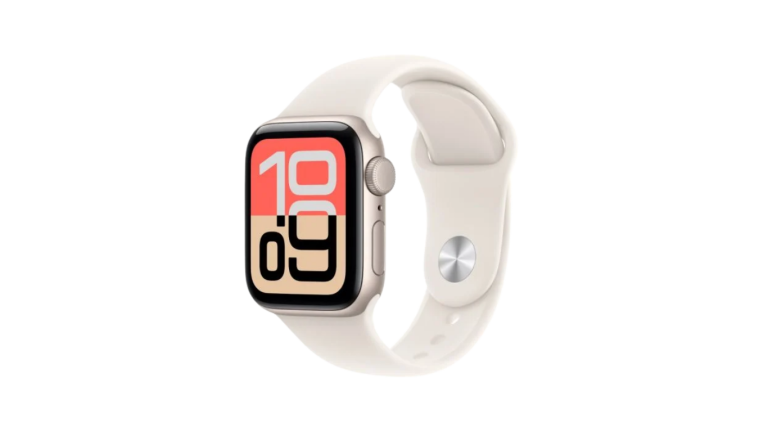
40mm or 44mm, GPS or GPS + Cellular.
From R5 195,70
Available to Order
Compare Apple Watch ModelsApple Watch Series 12: Sport Band
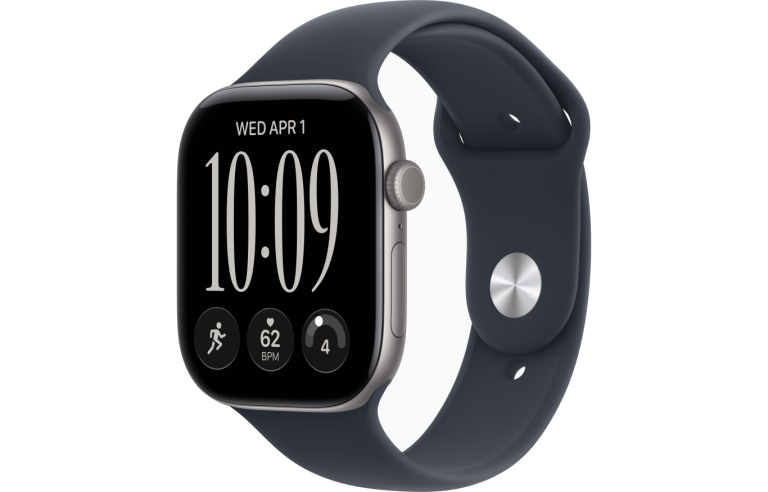
Series 12 with Sport Band, 42mm or 46mm.
From R8 314,50
Available
Compare Apple Watch ModelsApple Watch Series 11: Sport Band
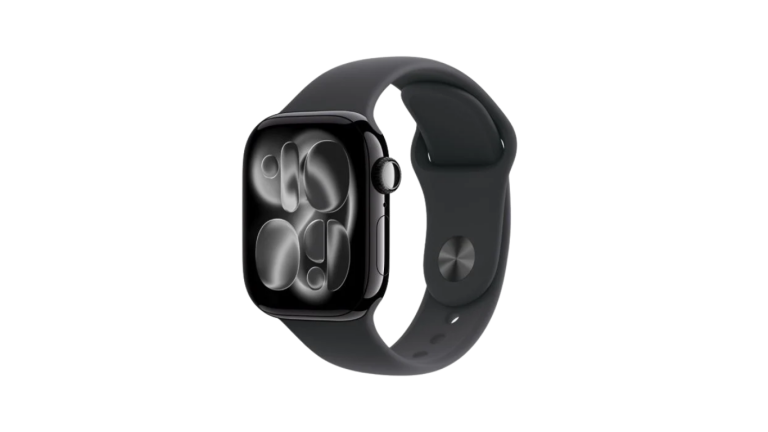
Series 11 with Sport Band, 42mm or 46mm.
From R9 310,19
Available to Order
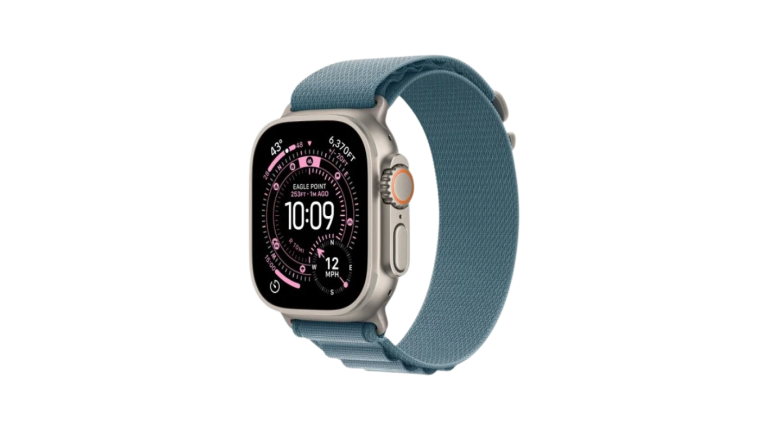
Compare Apple Watch ModelsApple Watch Ultra 4: Alpine Loop
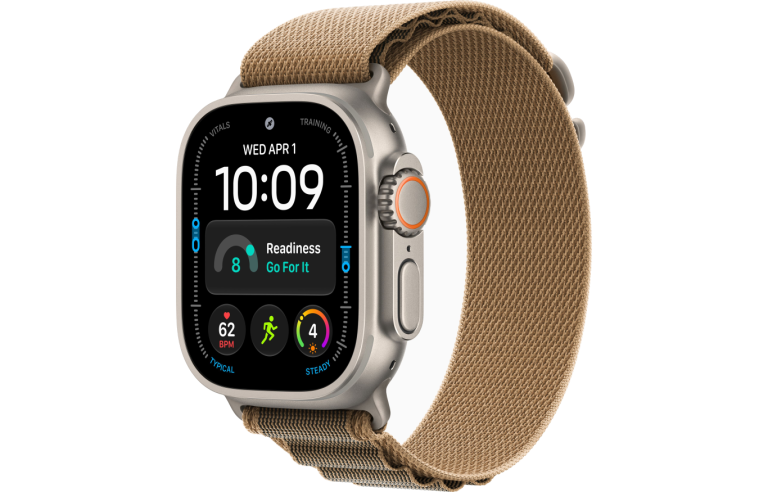
Ultra 4, 49mm titanium, GPS + Cellular.
R16 819,90
Available
Compare Apple Watch ModelsApple Watch Ultra 3: Alpine Loop
Ultra 3, 49mm titanium, GPS + Cellular.
R18 621,36
Available to Order
Compare Apple Watch Models
Everyday use and first-time buyers
If you mainly want notifications, activity rings, workout tracking, sleep tracking and safety features, Apple Watch SE 3 covers them at the lowest price. It has an Always-On display, wrist temperature sensing, sleep score and sleep apnoea notifications, and it charges to 80% in about 45 minutes in Apple's testing.
What SE 3 leaves out is the ECG app, the Blood Oxygen app and hypertension notifications, a dimmer display than the Series models and a shorter battery figure. If none of those matter to you, there is no need to spend more.
The lowest-priced Apple Watch at iShure.
From R5 195,70
Available to Order
Compare Apple Watch Models
Fitness, workouts and outdoor activities
All of these models track runs, cycles, swims and gym sessions, so you do not need an Ultra simply because you exercise. A Series model is the sensible step up for most regular runners, cyclists and gym users: it adds a brighter display that is easier to read in sunshine, Precision GPS, the ECG and Blood Oxygen apps and a longer battery figure than SE 3.
When an Ultra is worth it
Ultra 3 and Ultra 4 are built for longer and harder outings. They add precision dual-frequency GPS (L1 and L5), a much larger battery figure, a 100 m water-resistance rating with recreational diving to 40 m, a depth gauge to 40 m, an emergency siren and a flat sapphire crystal in a titanium case. Choose one for multi-day hikes, long trail runs, ocean swimming or recreational diving, or if you simply want to charge less often.
An Ultra is also larger and heavier, at about 61 to 63 g for the case alone, which some people find less comfortable for sleep tracking or on smaller wrists.
Satellite features
Apple Watch Ultra supports Emergency SOS and Find My via satellite in some countries. South Africa is not on Apple's list for these features, so they should not be part of your reason for buying an Ultra here.
Apple Watch Series 12: Sport Band
For most runners, cyclists and gym users.
From R8 314,50
Available
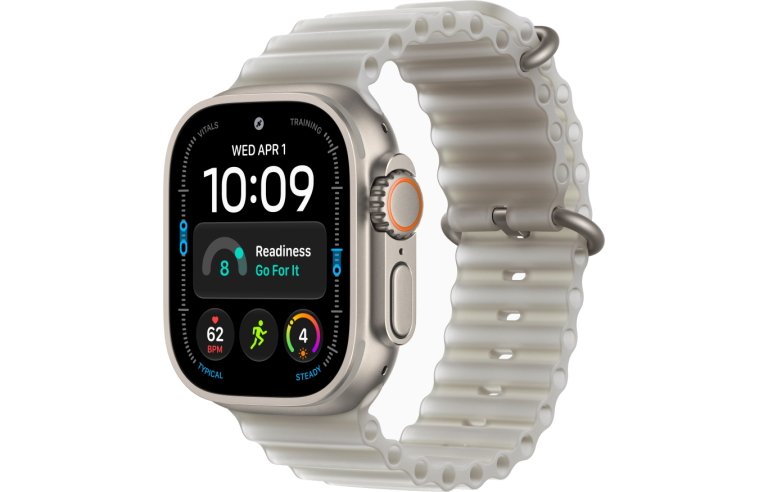
Compare Apple Watch ModelsApple Watch Ultra 4: Ocean Band
Ultra 4 with Ocean Band for water sports.
R16 819,90
Available
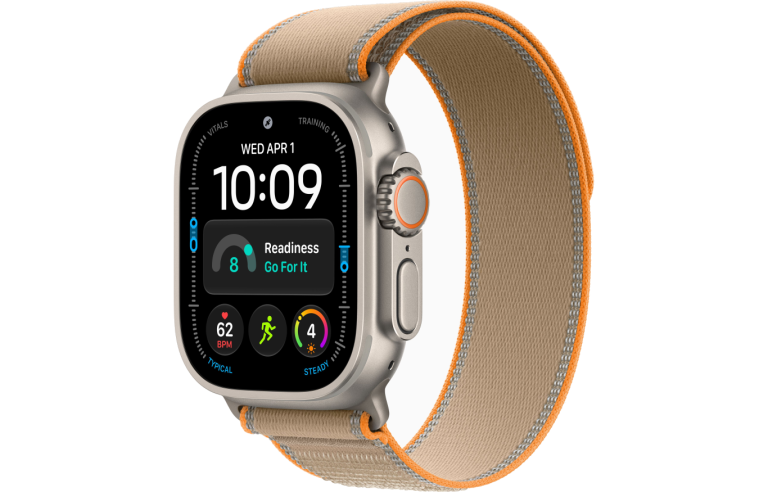
Compare Apple Watch ModelsApple Watch Ultra 4: Trail Loop
Ultra 4 with Trail Loop for running and hiking.
R16 819,90
Available to Order
Compare Apple Watch Models
Health features available in South Africa
Apple publishes which health features are available in each country. For South Africa, it lists the ECG app, irregular rhythm notifications, the Blood Oxygen app and sleep apnoea notifications. SE 3 supports irregular rhythm and sleep apnoea notifications but not the ECG or Blood Oxygen apps; the Series and Ultra models support all four.
Hypertension notifications are listed for South Africa on Series and Ultra models, but Apple notes that the feature may not yet be available on Series 12 or Ultra 4 in some regions while additional regulatory clearances are in process. If this feature matters to you, check Apple's feature availability page before buying a Series 12 or Ultra 4.
These features have age and use limits set by Apple. For example, the ECG app and hypertension notifications are for adults aged 22 and over, and Blood Oxygen readings are for general wellness. Apple Watch does not diagnose conditions; speak to a doctor about any health concern or reading.
Case size, comfort and display
Each family comes in two sizes, except Ultra, which comes in 49mm only. The smaller size (40mm on SE 3, 42mm on Series) is lighter and suits smaller wrists; the larger size (44mm or 46mm) shows more on screen. If you are unsure, compare your wrist with a watch you already wear: larger cases sit wider across the wrist.
Case material changes weight and finish rather than features in most cases. Aluminium is the lightest. Titanium and ceramic Series models are heavier and use sapphire crystal over the display, and at iShure they come only as GPS + Cellular.
Bands and sizing
Most bands at iShure come in S/M and M/L sizes, or in Small, Medium and Large for Ultra bands. Apple's band compatibility guidance says bands for 40mm and 41mm cases fit each other, and bands for 44mm, 45mm, 46mm and 49mm cases fit each other, with Ultra's Ocean Band, Alpine Loop and Trail Loop designed for the 49mm case. For the 42mm Series 11 and Series 12 case, check the compatibility shown on the band's iShure product page before buying a spare band.
Battery life and charging
Apple's battery figures come from its own tests on pre-production watches using a mixed day of time checks, notifications, app use, a workout with music and, on Series and Ultra, sleep tracking. Apple notes that battery life varies with use, settings, cellular network and signal strength. Cellular use and long GPS workouts shorten it.
- SE 3: up to 18 hours, or 32 hours in Low Power Mode. Expect to charge it every day.
- Series 11 and Series 12: up to 24 hours, or 38 hours in Low Power Mode, enough for a day plus sleep tracking with a quick charge. Both charge to 80% in about 30 minutes in Apple's testing.
- Ultra 3: up to 42 hours, or 72 hours in Low Power Mode.
- Ultra 4: up to 50 hours, or 84 hours in Low Power Mode.
Each watch comes with Apple's magnetic fast charger cable with a USB-C connector. Apple's charging times were measured with that cable and a USB-C power adapter, so a slower adapter will take longer.
GPS or GPS + Cellular?
A GPS model uses your iPhone's connection for calls, messages and data, and works on its own over Wi-Fi. It still tracks location for workouts without your phone. A GPS + Cellular model can make calls, receive messages and stream music when your iPhone is not nearby, which suits runners who leave the phone at home and people who want to be reachable without it.
In South Africa, Apple lists MTN and Vodacom as networks that support Apple Watch cellular. You need a compatible plan for the watch, so confirm with your network that your plan supports it before choosing a cellular model. All Ultra models at iShure are GPS + Cellular.
iPhone and software compatibility
Apple Watch needs an iPhone to set up and works only with iPhone, not Android phones. According to Apple, these models need an iPhone 11 or later, or iPhone SE (2nd generation) or later. Apple lists iOS 26 or later for Series 11, SE 3 and Ultra 3, and iOS 27 for Series 12 and Ultra 4. Update your iPhone before pairing.
Which Apple Watch should you choose?
SE 3 is enough when…
- You want notifications, activity, workouts, sleep tracking and safety features.
- You are buying your first Apple Watch, or a watch for a family member who has their own iPhone.
- You do not need the ECG or Blood Oxygen apps and are happy to charge daily.
A Series model is worth it when…
- You want the ECG and Blood Oxygen apps.
- You train regularly and want a brighter display and Precision GPS.
- You want faster charging and a full day plus sleep tracking.
- You prefer a titanium or ceramic finish.
An Ultra is justified when…
- You hike, run trails, swim in open water or dive recreationally.
- You want two days or more between charges.
- You want the 100 m water rating, dual-frequency GPS, siren and a tougher case, and you are comfortable with a larger, heavier watch.
Questions buyers ask
Which Apple Watch is best for a first-time buyer?
Apple Watch SE 3 covers notifications, activity, workouts, sleep tracking and safety features at the lowest price. Choose a Series model if you want the ECG and Blood Oxygen apps, a brighter display or longer battery life.
Do I need the cellular model?
Only if you want calls, messages and data when your iPhone is not nearby. In South Africa, Apple lists MTN and Vodacom for Apple Watch cellular, and you need a compatible plan from your network.
Does the ECG app work in South Africa?
Apple lists South Africa as a country where the ECG app is available, on Series and Ultra models. It is not available on SE 3. The ECG app is for adults aged 22 and over and does not replace medical advice.
Does Apple Watch work with Android phones?
No. Apple Watch needs an iPhone 11 or later, or iPhone SE (2nd generation) or later, to set up and use.
Is Apple Watch Ultra suitable for scuba diving?
Apple rates Ultra 3 and Ultra 4 for recreational diving to 40 metres under EN 13319. Apple says they should not be used below 40 metres, and diving features may need a separate app. Water resistance is not a permanent condition.
Our recommendation
Most people will be well served by Apple Watch SE 3 or a Series model. Start with SE 3 if you want the essentials at the lowest price. Step up to Series 12 or Series 11 if you want the ECG and Blood Oxygen apps, a brighter display and a full day plus sleep tracking. Choose an Ultra only if its extra battery, durability, dual-frequency GPS and diving ratings fit how you actually spend your time.
Whichever you choose, pick the case size that suits your wrist and confirm your network plan before buying a cellular model.
Sources
Technical and regional details are from Apple's published pages, checked on 15 October 2026. Models, sizes, materials, prices and availability come from iShure's product listings.
- Apple: Compare Apple Watch models
- Apple: Apple Watch Series 11 specifications (South Africa)
- Apple: Apple Watch Series 12 specifications
- Apple: Apple Watch SE 3 specifications
- Apple: Apple Watch Ultra 3 specifications (South Africa)
- Apple: Apple Watch Ultra 4 specifications
- Apple: watchOS feature availability
- Apple: Apple Watch cellular carriers
- Apple Support: Change your Apple Watch band (band compatibility)
Published 15 October 2026. Last reviewed 15 October 2026.